Boost your business calls using Google Maps. Learn practical strategies to rank higher, attract more local customers, and increase calls with simple, proven Google Business Profile optimizations.
The True Value of a Local Call—High-Intent Revenue
A phone call in the local business landscape is not just a digital interaction; it’s a high-intent, immediate revenue opportunity. It signals that the customer has moved past the research phase and is ready to engage, book, or purchase now. When a searcher clicks your “Call” button on Google Maps, they are bypassing the website browsing and price comparison stages. Your goal, therefore, is to transform your map presence from a mere listing into a seamless, irresistible call funnel.
This expanded guide goes beyond basic local SEO. We will detail the five most meticulous and impactful methods to optimize your Google Business Profile (GBP) and digital assets, guaranteeing a significant increase in the volume and quality of inbound customer calls.
1. Hyper-Optimize Your Google Business Profile (GBP) for the Instant Call Trigger
Your Google Business Profile is the primary conversion portal. Every field, photo, and description must be oriented toward one goal: instilling enough immediate confidence for the user to hit the call button.
1.1 Mandatory Call-to-Action Setup and Local Number Integrity
Do not underestimate the power of basic data fidelity. Your listed phone number must be impeccable. Using an outdated or disconnected number is equivalent to putting an “Out of Business” sign on your listing.
- Actionable Depth: Implement a Dedicated Local Tracking Number. While your primary number is vital, using a dynamic, local number (with the correct area code) that routes to your main line allows for granular analytics. This proves the ROI of your GBP efforts and identifies peak calling hours, allowing you to staff your lines appropriately to never miss a high-value lead. Ensure this number is formatted identically across all platforms (e.g., (555) 555-5555).
1.2 The Category and Service Selection Deep Dive: Matching Intent to Expertise
Google utilizes your category selection as the fundamental lens through which it filters search results. If a user searches for “emergency locksmith” and your primary category is simply “Service,” you won’t appear.
- Actionable Depth: Go beyond the generic primary category. Use all five available secondary categories that accurately describe your services. Furthermore, leverage the dedicated “Services” section within your GBP. This area acts as a rich field for geo-targeted and service-specific keywords. For instance, rather than just listing “Repairs,” list “Residential Roof Repair in North Austin” or “24-Hour Commercial HVAC Service.” This specific content directly feeds the algorithm, increasing your visibility in high-intent, long-tail searches that result in immediate calls.

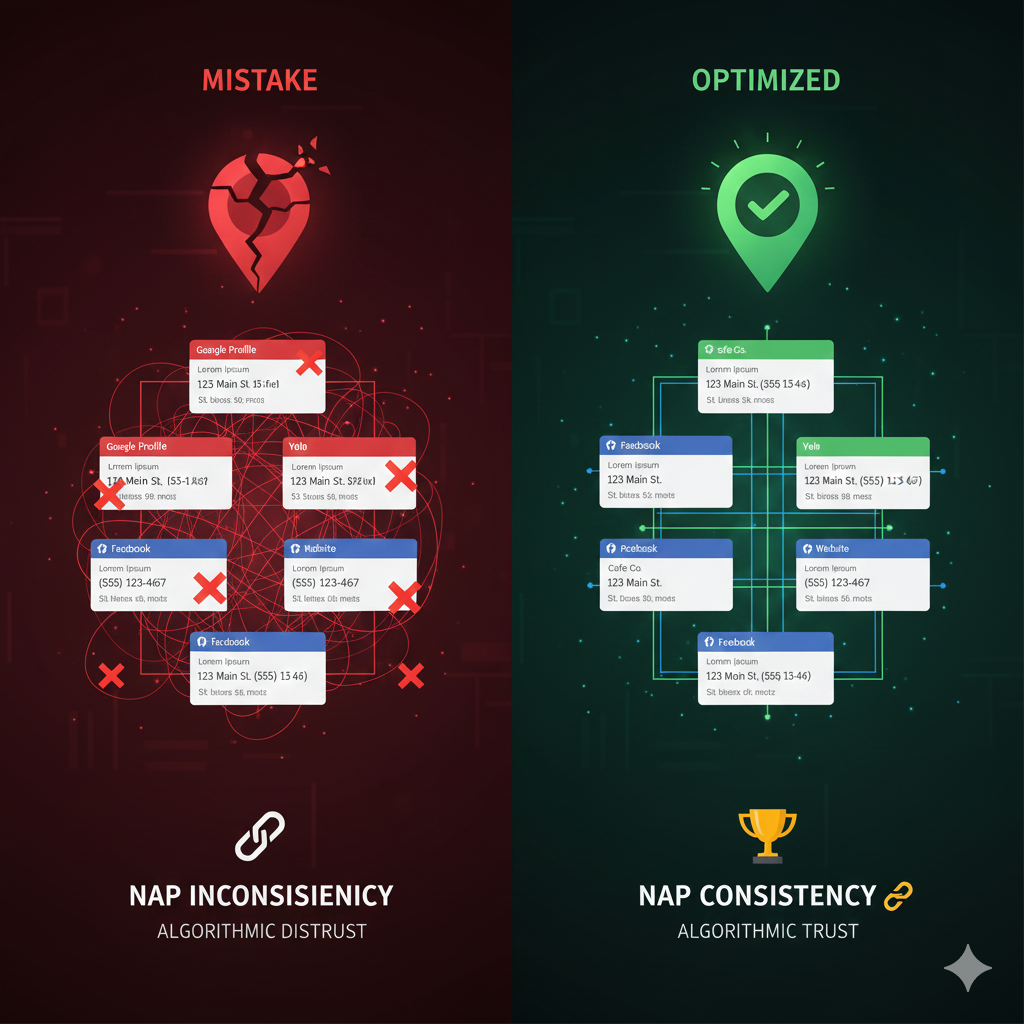
2. Mastering NAP Consistency: Establishing Algorithmic Trust and Authority
NAP (Name, Address, Phone Number) consistency is the bedrock of local SEO. Inconsistent NAP information doesn’t just confuse customers; it fragments Google’s confidence in your business’s legitimacy. This lack of confidence results in demotion, often pushing your listing below the “local pack” where the all-important call button is most visible.
2.1 The Two-Second Audit for Perfect Match Across the Digital Ecosystem
You must treat your NAP data as a sacred, unchangeable identity string. Small variations are seen as different businesses by the algorithm.
- Actionable Depth: Conduct a meticulous Citation Clean-Up. Check your data not just on major platforms (Yelp, Facebook), but also on industry-specific directories and local chamber of commerce sites. Use software tools to pinpoint and correct every instance of variation. For example, changing “Road” to “Rd.” or adding a missing area code across 50 citations can dramatically boost your trust signal, telling Google: “This business is real, stable, and therefore worthy of the top position.”
2.2 The Strategic Placement of Click-to-Call HTML
While the GBP provides the number, your website must reinforce it.
- Actionable Depth: Embed your phone number on your website using the tel: protocol (<a href=”tel:+15555555555″>Call Now</a>). This ensures that on any modern mobile device, tapping the number automatically opens the dialer, eliminating manual number input—a high-friction step that often causes drop-off. Place this code prominently in the header and footer of every page.
3. The Visual Trust Signal: Compelling Photos & Videos for Call Confidence
When a searcher sees your listing, they are evaluating your professionalism in a fraction of a second. High-quality visuals are your silent sales force, proving you are legitimate, successful, and reliable, thereby accelerating the decision to call.
3.1 Prioritizing “Trust” Visuals and Geo-Tagging
Customers are calling a service, not just a pin on a map. They want reassurance about the people and the environment.
- Actionable Depth: Invest in Professional, Humanizing Photography. Focus on:
- High-Quality Headshots: Pictures of your team smiling and looking professional. People call people, not logos.
- Service Excellence: Clear, action-oriented photos of your team providing the service (e.g., technician wearing branded uniform, clean workspace).
- Geo-Reinforcement: Before uploading new images, utilize image metadata tools to geo-tag the photos with your business’s latitude and longitude. This advanced technique reinforces your physical location to Google’s bots, further solidifying your presence in that specific local search radius.
- High-Quality Headshots: Pictures of your team smiling and looking professional. People call people, not logos.

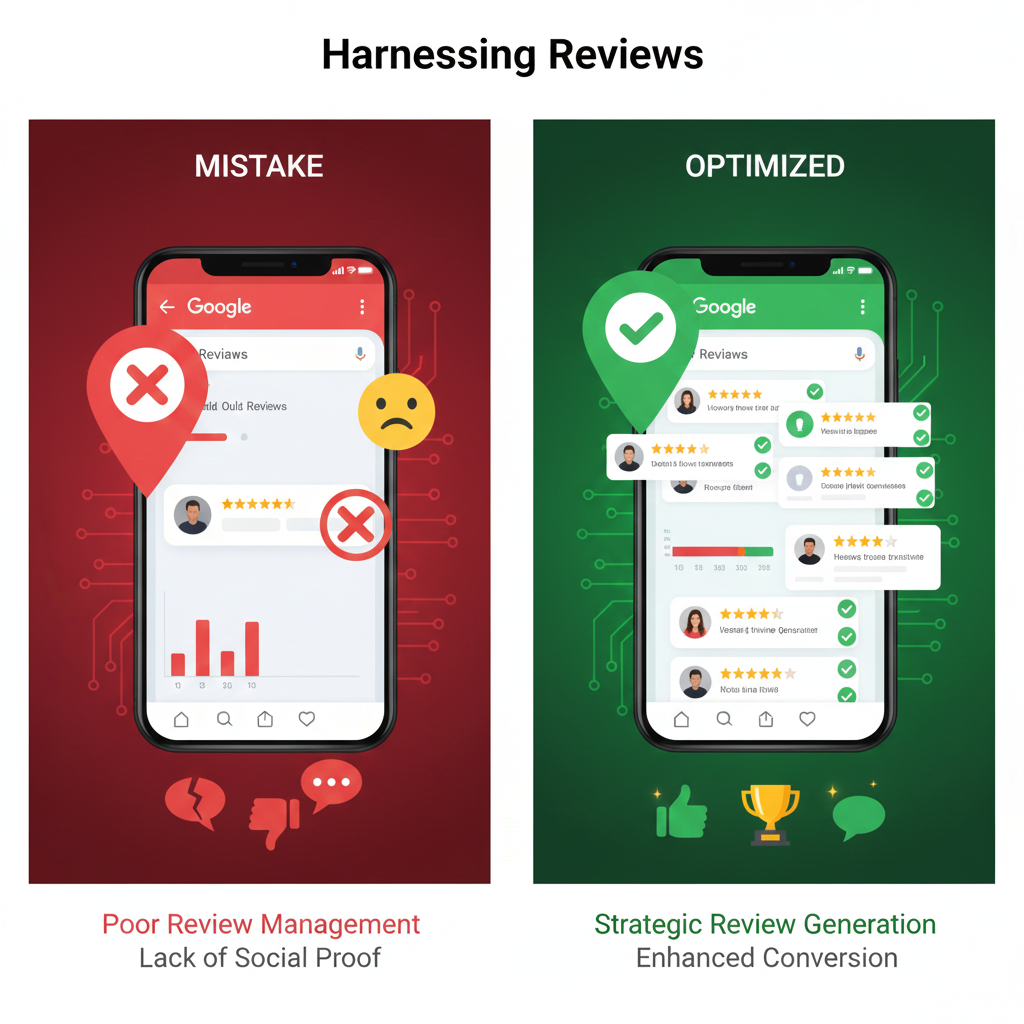
4. Harnessing Reviews: The Conversion Multiplier and Algorithm Feeder
Google has stated that the quantity, velocity (frequency), and quality of reviews are among the top ranking factors for local maps. Furthermore, reviews are the ultimate social proof that directly influences a customer’s willingness to pick up the phone.
4.1 The Strategic, Immediate Review Generation System
Don’t rely on passive review requests. The moment of delight (when a job is completed or a product is enjoyed) is the peak time to ask.
- Actionable Depth: Implement an Automated, Post-Transaction Request. Use a simple text message or email immediately after service completion with a direct link to your GBP review page. The goal is review velocity—getting a steady stream of fresh 5-star ratings, which Google interprets as a consistently excellent, highly relevant business.
4.2 The Defensive and Proactive Review Response Strategy
Responding professionally is critical. A positive response reinforces the good experience, while a composed, problem-solving response to a negative review demonstrates excellent customer service to prospective callers.
- Actionable Depth: Utilize your replies to inject Local Keywords and Call-to-Actions.
- Positive Reply: “Thank you for the fantastic feedback! We love providing the best furnace repair service in [City Name]! Call us anytime for maintenance!”
- Positive Reply: “Thank you for the fantastic feedback! We love providing the best furnace repair service in [City Name]! Call us anytime for maintenance!”
- This response not only engages the customer but subtly feeds keyword phrases back into the GBP content pool, where Google can index it for relevance.
5. Mobile-First Optimization: Eliminating Friction for the Impatient Caller
A vast majority of “near me” searches occur on mobile devices, often by users who need immediate assistance (a broken furnace, a flat tire, an emergency dental issue). Speed and accessibility are non-negotiable.
5.1 The Unmissable “Sticky Click-to-Call” Mandate
If a customer clicks through to your website from the GBP, you have mere seconds to capture that call before they bounce back to the map results.
- Actionable Depth: Implement a Permanently Fixed “Sticky” Phone Button on your mobile website. This is a floating bar or icon that stays locked to the bottom or top of the viewport, regardless of how far the user scrolls. This button must be large, high-contrast, and instantly trigger the tel: function. This singular element can increase your website-generated phone call conversions by 20-50%.
5.2 Page Speed for Instant Gratification: The Sub-Three-Second Rule
A slow website is a conversion killer. Google uses site speed as a ranking signal, but more importantly, customers simply won’t wait.
- Actionable Depth: Aggressively Optimize Core Web Vitals (CWV). Use Google PageSpeed Insights to diagnose and remedy issues, focusing on maximizing your LCP (Largest Contentful Paint) speed. Ensure your image files are compressed and lazy-loaded. A website that loads in under 3 seconds drastically reduces bounce rate, keeping the high-intent mobile searcher on your page long enough to see—and press—your call button.
Conclusion: From Map Pin to Ringing Phone—The Conversion Ecosystem
The transition from a Google Maps listing to a ringing phone is a sophisticated process driven by trust, accessibility, and algorithmic relevance. By meticulous attention to these five proven strategies—from deep GBP optimization and unwavering NAP consistency to fostering review trust and building a hyper-responsive mobile site—you create a cohesive local conversion ecosystem. Stop settling for mere visibility; implement these methods to establish yourself as the most credible, easiest-to-contact business in your local area, turning every map view into valuable revenue.