The most common local SEO mistakes that hurt your Google Maps rankings and learn how to fix them for better visibility and more customers in 2025.
In today’s hyper-competitive online marketplace, local businesses must leverage local SEO to stand out, particularly on Google Maps. With the majority of consumers using Google to search for businesses near them, ranking high in local search results is crucial for driving foot traffic and generating sales. However, many businesses still make fundamental local SEO mistakes that negatively impact their visibility on Google Maps.
In this article, we’ll uncover five common local SEO mistakes that can harm your Google Maps rankings, and provide actionable tips for correcting them to ensure you’re optimized for success in 2025.
1. Ignoring or Inaccurate Google My Business (GMB) Profile
Your Google My Business (GMB) profile is the cornerstone of your local SEO strategy. It directly influences your Google Maps ranking and local search visibility. Yet, many businesses still neglect or improperly optimize their GMB profile, causing them to miss out on valuable traffic.
Mistake to Avoid: Failing to claim or update your GMB profile, listing incorrect business hours, or using irrelevant business categories.
How to Fix It:
- Claim Your GMB Listing: Ensure your business is listed on Google My Business if you haven’t done so yet. Once claimed, you can manage and update your profile.
- Optimize Business Information: Fill out every section, including accurate business name, address, phone number (NAP), website, business hours, and categories. Consistency is key across all platforms.
- Add Photos and Videos: Upload high-quality images of your products, services, and premises. This not only enhances your listing but also builds trust with potential customers.
By providing complete and accurate information, you enhance your chances of ranking higher on Google Maps and improving your local visibility.

2. Inconsistent NAP (Name, Address, Phone Number) Information Across the Web
NAP consistency is vital for local SEO. Google uses your NAP information as a ranking signal to verify your business’s legitimacy. When your business details are inconsistent across various online directories and websites, it confuses search engines and can harm your Google Maps ranking.
Mistake to Avoid: Using different variations of your business name, address, or phone number on your website, social media profiles, or local directories.
How to Fix It:
- Ensure NAP Consistency: Check that your business name, address, and phone number are consistent across all online platforms, including your website, social media, local directories, and third-party sites.
- Use Citation Tools: Utilize tools like Moz Local or Yext to audit your citations and fix any inconsistencies.
The more consistent your NAP information is, the more likely Google is to trust your business, ultimately boosting your Google Maps rankings.

3. Lack of Local Reviews or Poor Review Management
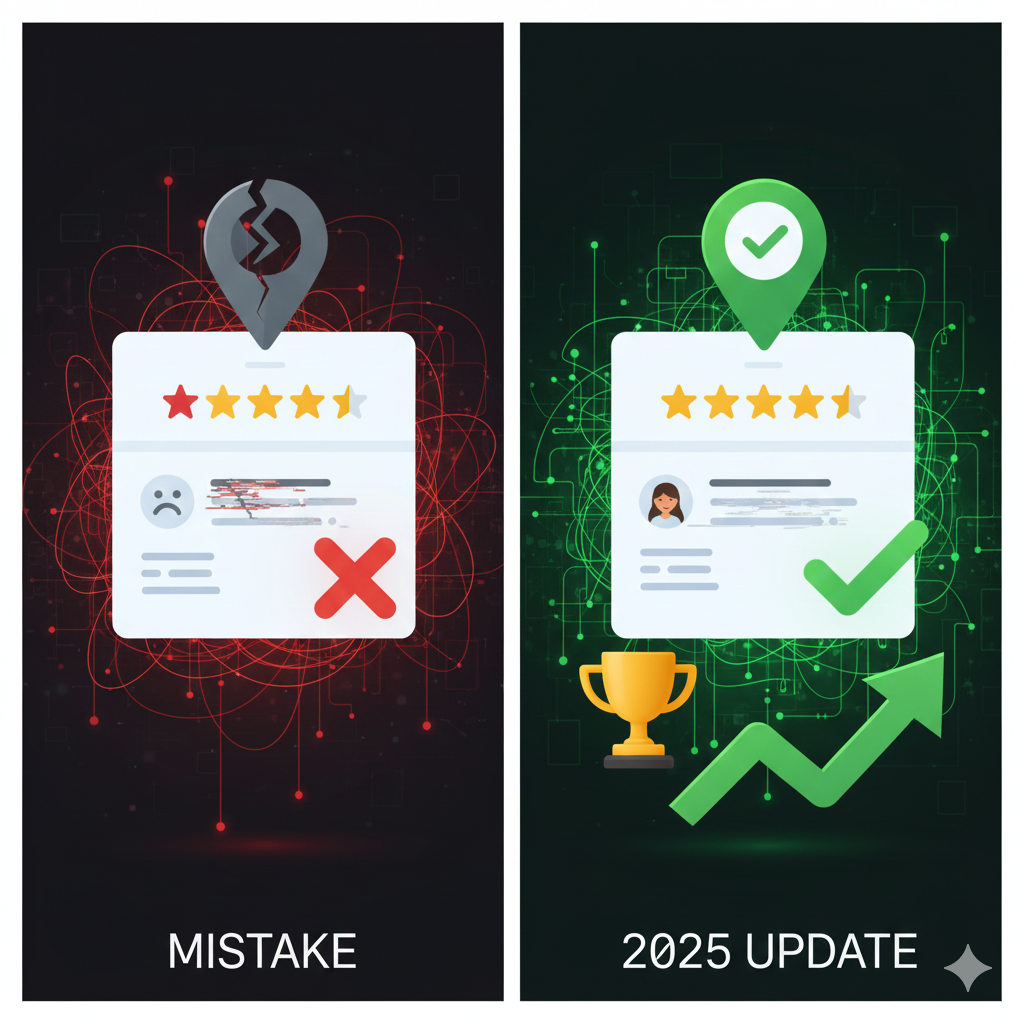
Customer reviews are one of the most important factors in local SEO, especially for Google Maps rankings. Reviews not only influence your rankings but also impact potential customers’ decision-making process. Unfortunately, many businesses either neglect their reviews or fail to manage them properly.
Mistake to Avoid: Not encouraging reviews, failing to respond to reviews, or accumulating mostly negative feedback.
How to Fix It:
- Encourage Positive Reviews: Actively ask satisfied customers to leave positive reviews on your Google My Business profile. Offer incentives like discounts or loyalty points (without violating Google’s policies).
- Respond to All Reviews: Engage with your customers by responding to both positive and negative reviews. This shows potential customers that you value feedback and are committed to improving.
- Address Negative Reviews: If you receive a negative review, handle it professionally. Apologize for any issues and offer solutions or a direct contact for resolution.
A solid review strategy can improve both your Google Maps ranking and your reputation in the local community.
4. Neglecting Mobile Optimization
With the increasing use of smartphones, Google prioritizes mobile-first indexing. This means that the mobile version of your website is now the primary version for ranking and indexing. A poorly optimized mobile site can hurt your local SEO and ultimately impact your Google Maps ranking.
Mistake to Avoid: Having a slow, unresponsive, or difficult-to-navigate mobile website.
How to Fix It:
- Make Your Website Mobile-Friendly: Ensure your website is fully responsive, meaning it automatically adjusts to fit any screen size.
- Increase Site Speed: Mobile users expect fast-loading websites. Use tools like Google PageSpeed Insights to test and improve your website’s loading speed.
- Streamline User Experience: Simplify navigation and make it easy for users to find essential information like contact details, store hours, and directions.
A fast and responsive website that provides a seamless mobile experience will improve your rankings in local search results, including Google Maps.

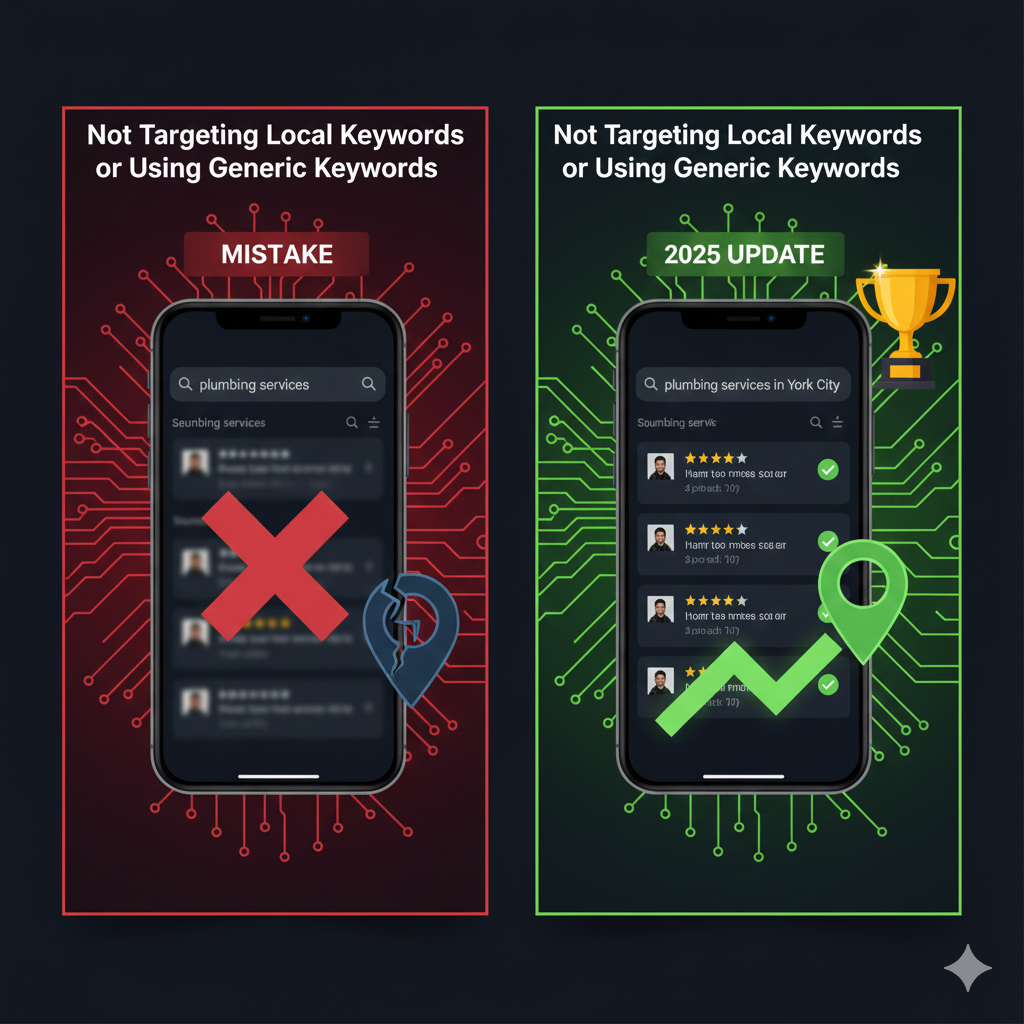
5. Not Targeting Local Keywords or Using Generic Keywords
Local SEO is all about targeting location-specific keywords to help your business show up when people search for products or services near them. Many businesses make the mistake of using broad, generic keywords that don’t help with local ranking.
Mistake to Avoid: Failing to optimize for geo-targeted keywords or using keywords that don’t relate to your specific location.
How to Fix It:
- Use Local Keywords: Incorporate location-specific terms (city, neighborhood, region) into your website’s content, meta tags, and headers. For example, instead of just “plumbing services,” use “plumbing services in [City Name].”
- Optimize Your Content: Create localized blog posts, landing pages, or service pages targeting specific neighborhoods or zip codes to attract local search traffic.
- Add Local Schema Markup: Use local business schema markup on your website to help Google understand your business’s location and services better.
By targeting local search intent with the right keywords, you increase your chances of ranking higher in both local search and Google Maps.
Final Thoughts: Avoid These Local SEO Mistakes for Google Maps Success
In 2025, local SEO is more important than ever. By avoiding these five common mistakes and implementing best practices for Google My Business, NAP consistency, reviews, mobile optimization, and local keyword targeting, you can significantly improve your Google Maps ranking and increase your business’s visibility in local search results.
Staying ahead of the competition requires constant attention to your local SEO strategy. Make the necessary adjustments, track your progress, and continue to refine your approach for long-term success.