Learn how to select the best categories and high-impact keywords for your Google Business Profile. Boost your local SEO visibility, improve Google Maps rankings, and attract more customers with updated AIO, AEO, and GEO strategies.
How to Choose the Right Categories and Keywords for Your Google Business Profile
Choosing the right categories and keywords for your Google Business Profile (GBP) is one of the most powerful steps you can take to improve local search visibility. Your category selection tells Google exactly what your business does, while your keywords help the algorithm understand when and where to show your listing. With Google’s search system becoming more intent-driven and conversational, selecting the correct categories and optimizing with the right semantic keywords has become essential for ranking in Google Maps and appearing in local search results.
When your business categories and keywords are properly aligned, Google can more easily match your listing with the ideal audience. This increases visibility, search relevance, and customer trust. A well-optimized profile appears more frequently for “near me” searches, industry-specific queries, and local intent keywords. This is why choosing the right categories is not simply about labeling your business—it’s about defining your digital identity in a way that matches user behavior and Google’s ranking signals.
Understanding the Role of Categories in Google Business Profile
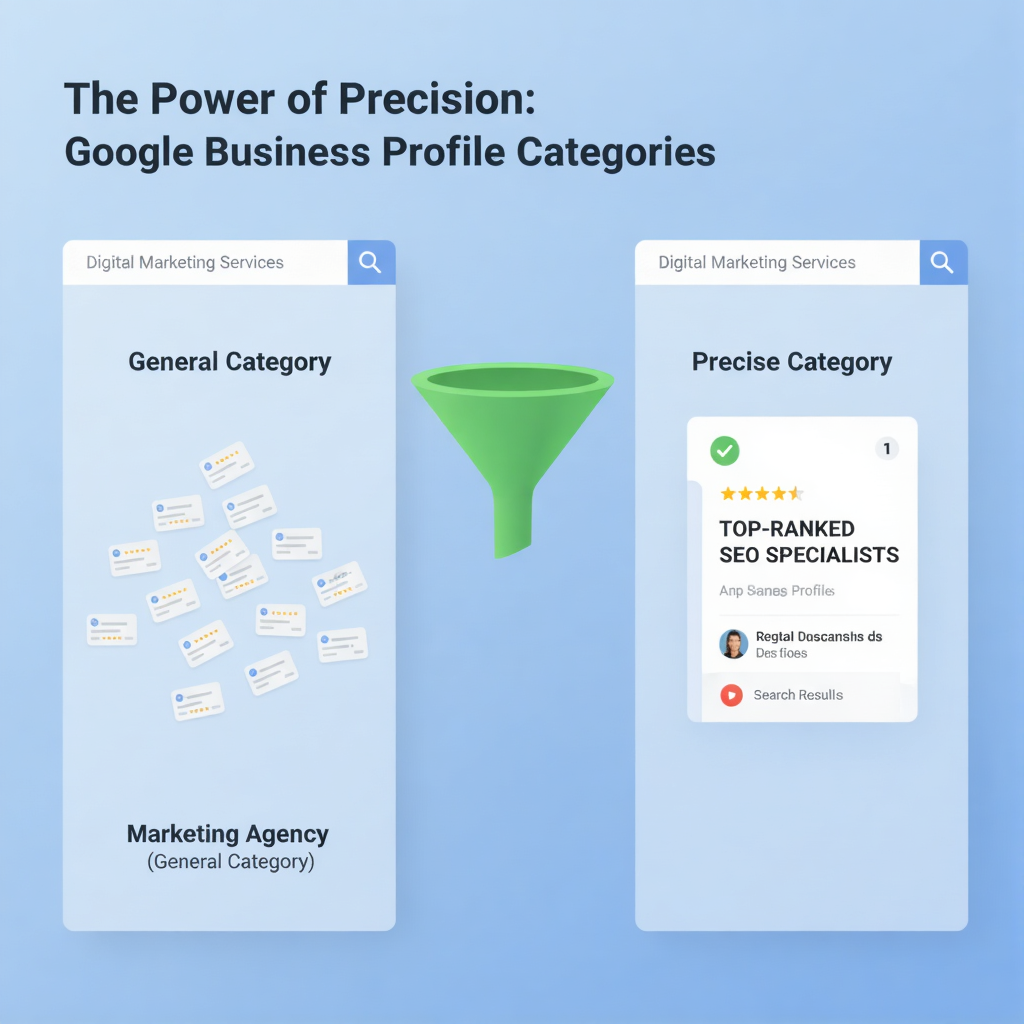
Your primary category acts as your main ranking signal. It identifies the core service your business provides. Google relies heavily on this category to determine which searches your listing appears in. This makes accuracy extremely important. A business that selects the wrong primary category may never rank for its main services, no matter how strong the rest of its SEO is. Your additional categories work as supporting tags that help Google understand the full scope of what you offer. When chosen correctly, they expand your visibility for multiple related searches and help your business appear in a wider range of customer queries.
The key is to choose the most specific category that accurately represents your business. Google rewards precision because it allows the algorithm to match your profile with users who have clear search intent. For example, a business listed as “Digital Marketing Agency” will appear in broader searches, but a business listed as “SEO Agency” will rank better for search-specific queries. Precision drives relevance, and relevance drives ranking performance.
How Keywords Shape Your Google Maps Visibility
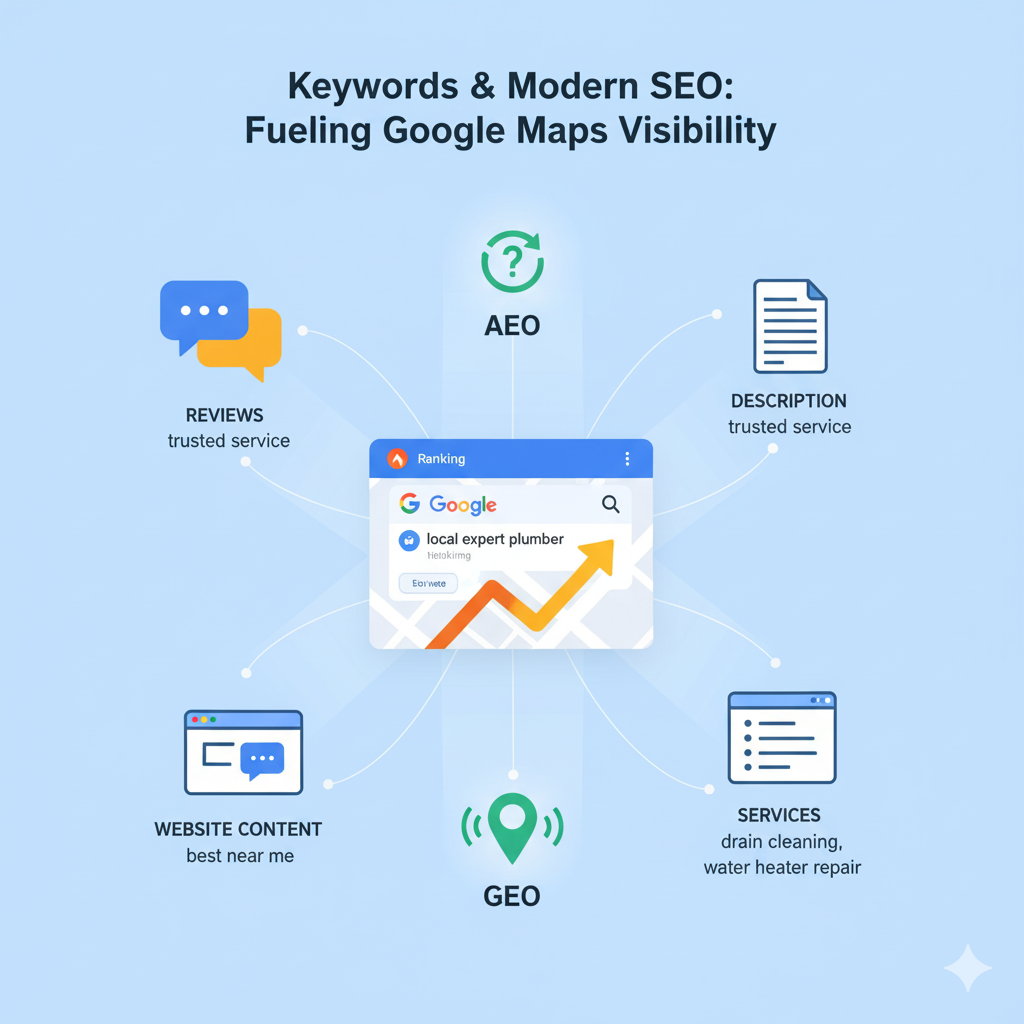
Keywords play a vital role in optimizing your Google Business Profile, even though you cannot directly insert them into the category field. Instead, your keywords must be naturally integrated into your business description, services, website content, posts, reviews, and Q&A section. Google uses this content as context to determine how your listing should be ranked.
Modern SEO practices such as AIO (All-In-One Optimization), AEO (Answer Engine Optimization), and GEO (Location-Based Optimization) ensure that your business communicates with both the algorithm and the user. AIO helps unify your content strategy across Google Maps, your website, and social signals. AEO ensures your content answers user questions directly so your profile can appear for conversational and voice searches. GEO optimization enables Google to understand exactly which areas or cities your business serves, increasing your chances of being found by local customers.
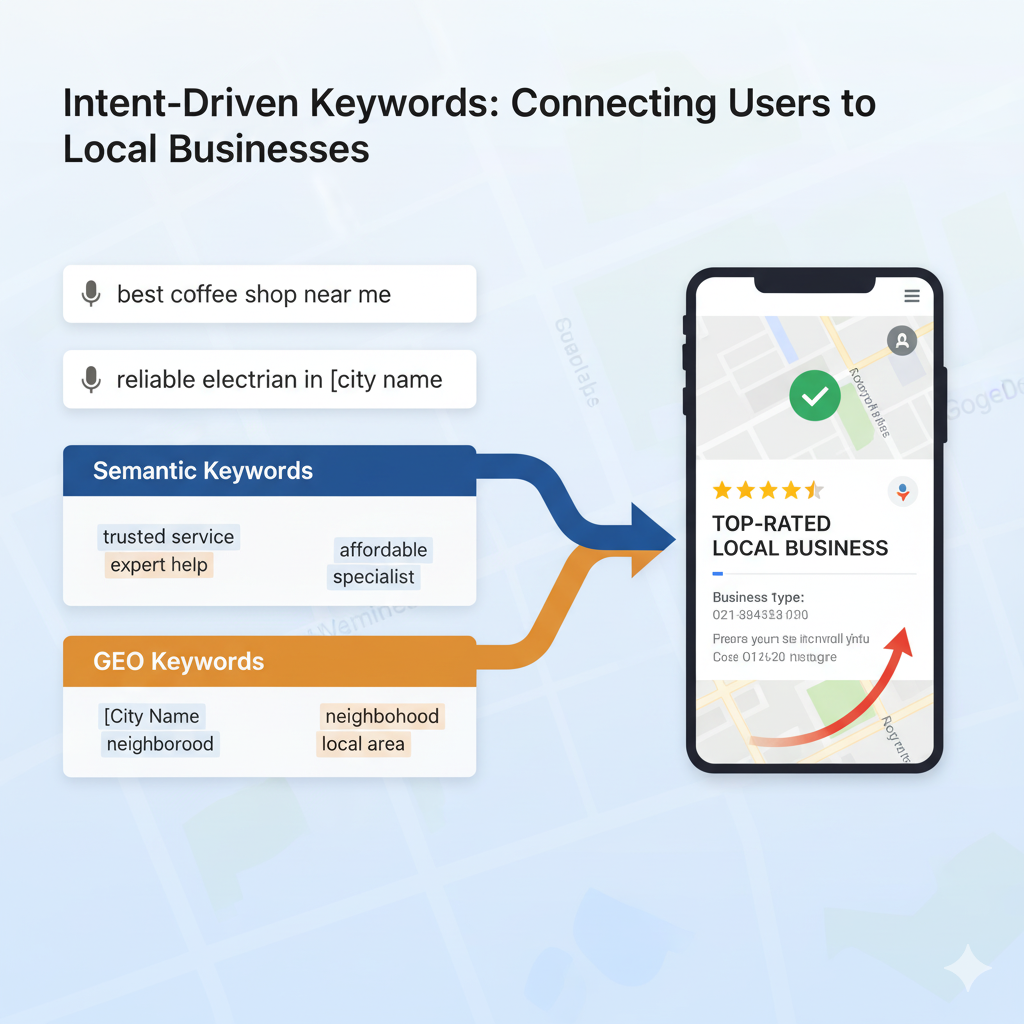
The right keywords help Google connect your listing with search intent. When customers use phrases like “best plumber near me,” “affordable dentist in my city,” or “top digital agency,” Google matches search terms with consistent keywords across your online presence. This is why your keyword selection must include both primary service keywords and semantic variations that represent real-world customer searches.
Creating a Keyword Strategy That Matches Google’s Intent Signals
A strong keyword strategy for GBP focuses on natural language and local relevance. Your target audience is not typing robotic phrases—they are searching with real problems, real questions, and real needs. Google’s algorithm is designed to understand the meaning behind those searches, not just the words. This is where semantic keywords come into play. Phrases such as “local repair expert,” “certified specialist,” “trusted service provider,” or “nearby consultant” help build intent-driven relevance.
When paired with GEO terms such as your city, neighborhood, or service area, these keywords help Google map your business to users geographically. This increases your chances of being shown for local searches, Google Maps results, and voice search queries. The more your content reflects user intent, the stronger your visibility becomes.
Aligning Categories and Keywords for Maximum Ranking Power
Your categories and keywords must work together. When they align, Google considers your business listing complete, relevant, and trustworthy. A mismatch—such as choosing “Restaurant” as your category but targeting keywords for “Catering Services”—confuses the algorithm and weakens your ranking power.
The best approach is to ensure that your keywords consistently support your primary category. Your business description should include your main service keyword within the first sentence, followed by secondary and semantic terms that reflect what customers search for. Your website landing page should reinforce these keywords, and your reviews should naturally mention your services and location.
This alignment creates a strong signal across your online presence, helping Google accurately classify your business and reward it with higher rankings.
Conclusion: Choose Smart Categories and Keywords to Win Local Search
Choosing the right categories and keywords for your Google Business Profile is not just a setup step—it is a strategic foundation for long-term local SEO success. When your categories are accurate and your keywords reflect real user intent, your business becomes easier for Google to understand and easier for customers to find. A combination of AIO, AEO, and GEO optimization enables your profile to rank higher, attract more local traffic, and convert more customers.
The better you define your business through correct categories and targeted keywords, the more visibility, engagement, and growth you will see on Google Maps and local search.